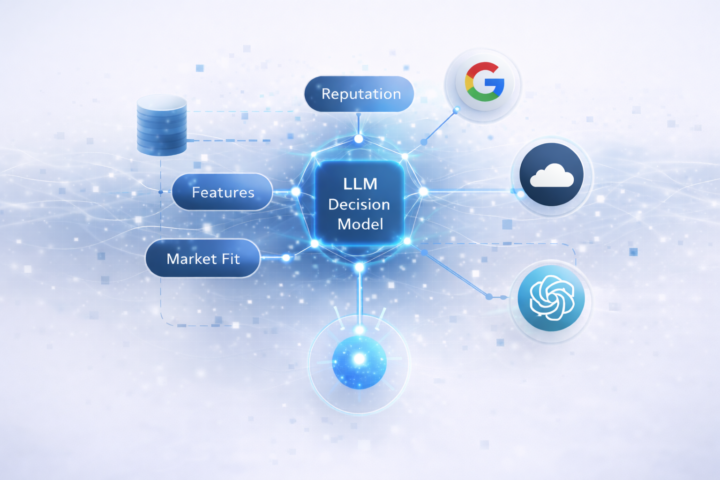
One of the most important questions in the era of AI-driven discovery is simple: how do AI systems decide which brands to recommend?
When users ask AI assistants for product recommendations, they rarely receive a list of links. Instead, large language models generate structured answers that include specific companies.
Understanding how AI recommends brands is becoming a critical competitive advantage for companies operating in digital markets.
The brands that appear in AI-generated answers often gain disproportionate visibility and influence buyer decisions before a user even visits a website.
This behavior is part of a broader structural shift explained in The LLM Brand Positioning Framework.
How AI Recommends Brands in Generated Answers
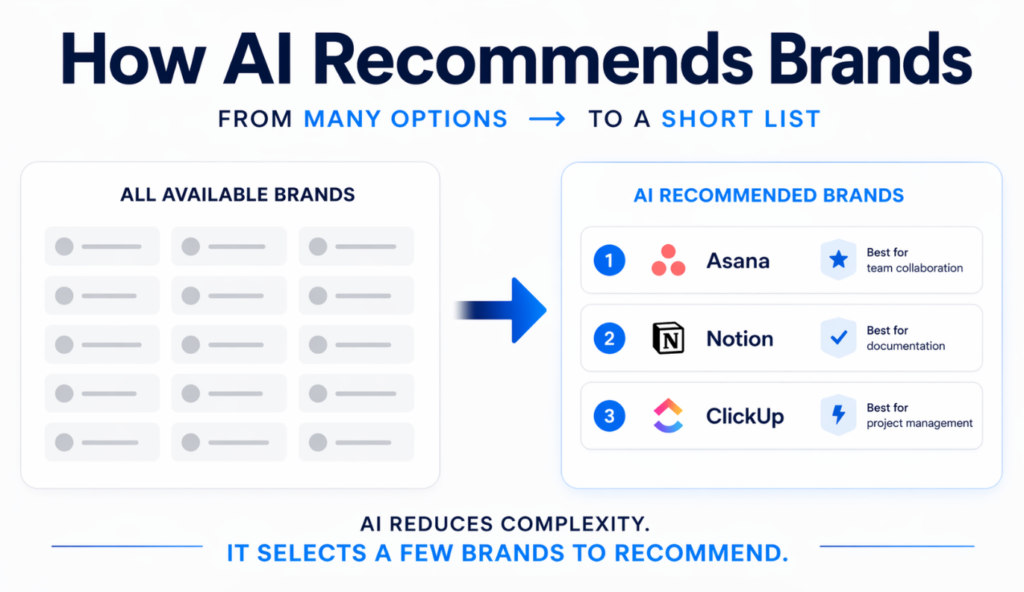
Large language models do not rank websites the way search engines do. Instead, they synthesize answers by selecting entities that fit the user’s intent.
This selection process is driven by the prompts users ask and the way models interpret intent – an area often referred to as AI Buyer Prompt Intelligence.
When an AI system receives a query such as:
“What are the best AI marketing platforms?”
the model evaluates its internal knowledge representation and selects brands that match the category and context.
This process determines how AI recommends brands in generated answers.
Brands that are strongly associated with the category and recognized as authoritative entities have a higher probability of inclusion.
The Core Signals Behind AI Brand Recommendations
Several structural signals influence how language models choose which brands appear in answers.
1. Entity Authority
The model must recognize the brand as a legitimate entity within the domain.
Brands with strong entity authority appear consistently across credible sources and discussions.
Learn more about this concept in Entity Authority in AI.
2. Category Association
The AI system must associate the brand with a specific product category.
If the model clearly understands that a company belongs to a defined category, it becomes more likely to recommend it when a relevant prompt appears.
This concept is closely related to LLM brand positioning.
3. Comparative Context
AI recommendations often emerge from comparative prompts such as:
- Best tools
- Top platforms
- Recommended solutions
- Alternatives to a known brand
These prompts force the model to evaluate multiple entities and select the most relevant examples.
This selection behavior determines how AI recommends brands across different prompts.
4. Semantic Relationships
Language models understand brands through relationships with other entities.
For example, a brand may be associated with:
- a specific technology category
- a type of use case
- other competing vendors
These semantic relationships help the model determine which brands belong in the same recommendation space.
Why Some Brands Appear in AI Answers Repeatedly
Many companies notice that the same brands appear repeatedly in AI-generated recommendations.
This pattern is not random.
Brands that have strong entity authority, clear category alignment, and consistent references across the web tend to surface more often in AI responses.
These brands effectively dominate the recommendation layer of AI-driven discovery.
The Connection Between AI Recommendations and AI Visibility
AI visibility refers to how frequently a brand appears in AI-generated answers.
The way AI recommends brands directly influences that visibility.
If a brand is repeatedly selected during the recommendation process, it gains a larger share of AI-generated exposure.
This concept is often described as prompt market share.
Why Understanding AI Recommendations Matters
In traditional digital marketing, discovery started with search results.
In AI-driven environments, discovery increasingly starts with a conversation.
When a user asks an AI assistant for recommendations, the brands appearing in that answer may define the entire shortlist of vendors the buyer considers.
Understanding how AI recommends brands is therefore essential for companies seeking to remain visible in the emerging AI discovery ecosystem.
As AI assistants become a primary interface for product discovery, brand positioning inside language models will become one of the most important competitive dynamics in modern marketing.